
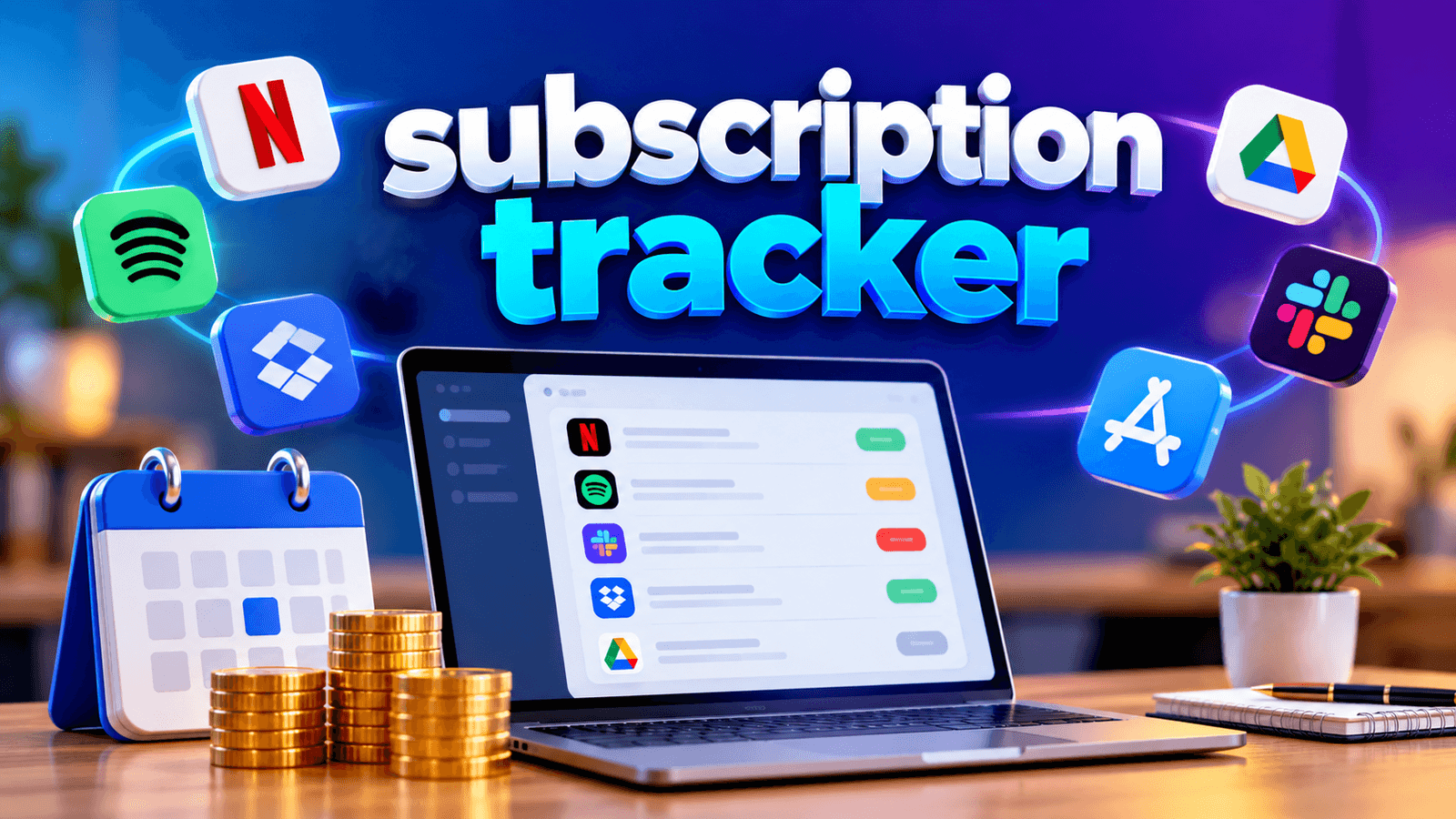
Build a subscription tracker that helps businesses uncover recurring software costs, monitor SaaS spending, and identify subscriptions they no longer need.
A subscription tracker for businesses could solve a simple but expensive problem: companies accumulate recurring software subscriptions across departments, cards, and employee accounts, making total SaaS spending difficult to see. A focused app could centralize recurring charges, identify duplicate or forgotten tools alert teams before renewals and give owners a clearer picture of monthly software costs.
A subscription tracker for businesses could solve a simple but expensive problem: companies accumulate recurring software subscriptions across departments, cards, and employee accounts, making total SaaS spending difficult to see. A focused app could centralize recurring charges, identify duplicate or forgotten tools alert teams before renewals and give owners a clearer picture of monthly software costs.
Why Businesses Need a Subscription Tracker
Software purchasing is increasingly distributed. Marketing may subscribe to design tools, sales teams add prospecting platforms, and individual employees can start smaller subscriptions without creating a centralized record. The resulting problem is not simply “too many subscriptions.” It is poor visibility. A business may struggle to determine what it pays each month, who owns each tool, whether employees still use it, and when the next renewal occurs. Businesses already exploring broader AI and automation solutions can browse the AI App Space product directory to see how quickly specialized software categories are expanding.
How the Subscription Tracker App Would Work
The MVP should make subscription discovery and review simple. Users could connect supported financial data sources or initially import transaction files. The app would identify likely recurring software payments and place them in one dashboard. Each subscription could show its vendor, estimated recurring cost, renewal schedule assigned owner and review status. Users could then mark subscriptions as essential under review, duplicate or scheduled for cancellation.
Subscription Tracker Alerts Could Prevent Forgotten Renewals
Renewal alerts would be one of the strongest retention features. Instead of discovering an annual charge after payment, teams could receive a reminder before the renewal date and decide whether the software still provides enough value. A later version could use AI to categorize expenses detect unusual increases, identify potentially overlapping software, and summarize spending by department.
Start With a Narrow Business Workflow
The product should avoid becoming a complete accounting platform. Its core promise is simpler: find recurring software costs and help businesses decide what should stay. For example, employee onboarding and offboarding can affect software spending because access to multiple workplace tools changes as people join or leave. The AI employee onboarding guide provides additional context around automating employee-related software workflows.
A focused consumer app such as Femi Guard on Google Play also illustrates a useful product principle: solve a clearly defined problem instead of filling an MVP with unrelated functionality.
How This Finance App Could Make Money
A subscription model fits the product because software expenses and renewals require ongoing monitoring. Pricing could scale according to the number of tracked subscriptions, users connected accounts or advanced reporting features. The MVP should first validate whether small businesses will actively review detected subscriptions and whether renewal alerts lead to useful actions. Bank integrations, automated cancellation workflows, advanced AI recommendations, and accounting integrations can come later.
Want More App and SaaS Opportunities?
Follow Apps Hunt on Instagram, TikTok, and Pinterest for more practical app ideas, AI tools, SaaS opportunities, automation concepts, and emerging digital business models.
Final Takeaway
A business subscription tracker does not need hundreds of features to provide value. Start with recurring-payment detection, a unified subscription dashboard, ownership tracking, and renewal alerts. If early users consistently discover unnecessary spending or gain better control over renewals, that provides a stronger reason to expand the MVP into a broader SaaS spend-management product.
Frequently asked questions
A subscription tracker is an app or software tool that organizes recurring payments in one place. A business-focused version can track software subscriptions, renewal dates, costs, ownership, and spending changes.
It can give owners and finance teams a clearer view of recurring software expenses. It may also help them identify forgotten subscriptions, review upcoming renewals, and understand which departments are responsible for particular tools.
Potentially, yes. With appropriate financial-data integrations, software can analyze transaction data to identify recurring charges. An MVP could start with transaction imports before adding more complex integrations.
Payment data alone cannot reliably prove whether software is unused. A more advanced product could combine payment information with user activity, employee ownership, or integrations to flag subscriptions for review.
No. An expense tracker usually covers many types of spending, while a subscription tracker focuses specifically on recurring payments, renewals, and subscription management.
Useful MVP features include recurring-payment detection, subscription categorization, renewal reminders, ownership assignment, cost summaries, and a review workflow.
It can help businesses identify expenses worth reviewing, such as forgotten, duplicate, or unnecessary subscriptions. Actual savings depend on the company's subscriptions and cancellation decisions.
Potential users include small-business owners, finance teams, agencies, startups, operations managers, and businesses that pay for multiple online tools.
Possible models include monthly or annual subscriptions, tiered plans based on tracked subscriptions or users, and premium features such as advanced reporting, integrations, or AI-assisted spending analysis.
Start with subscription discovery, a central dashboard, cost tracking, ownership fields, and renewal alerts. Validate whether businesses regularly use those features before investing in complex integrations or automated cancellation.