
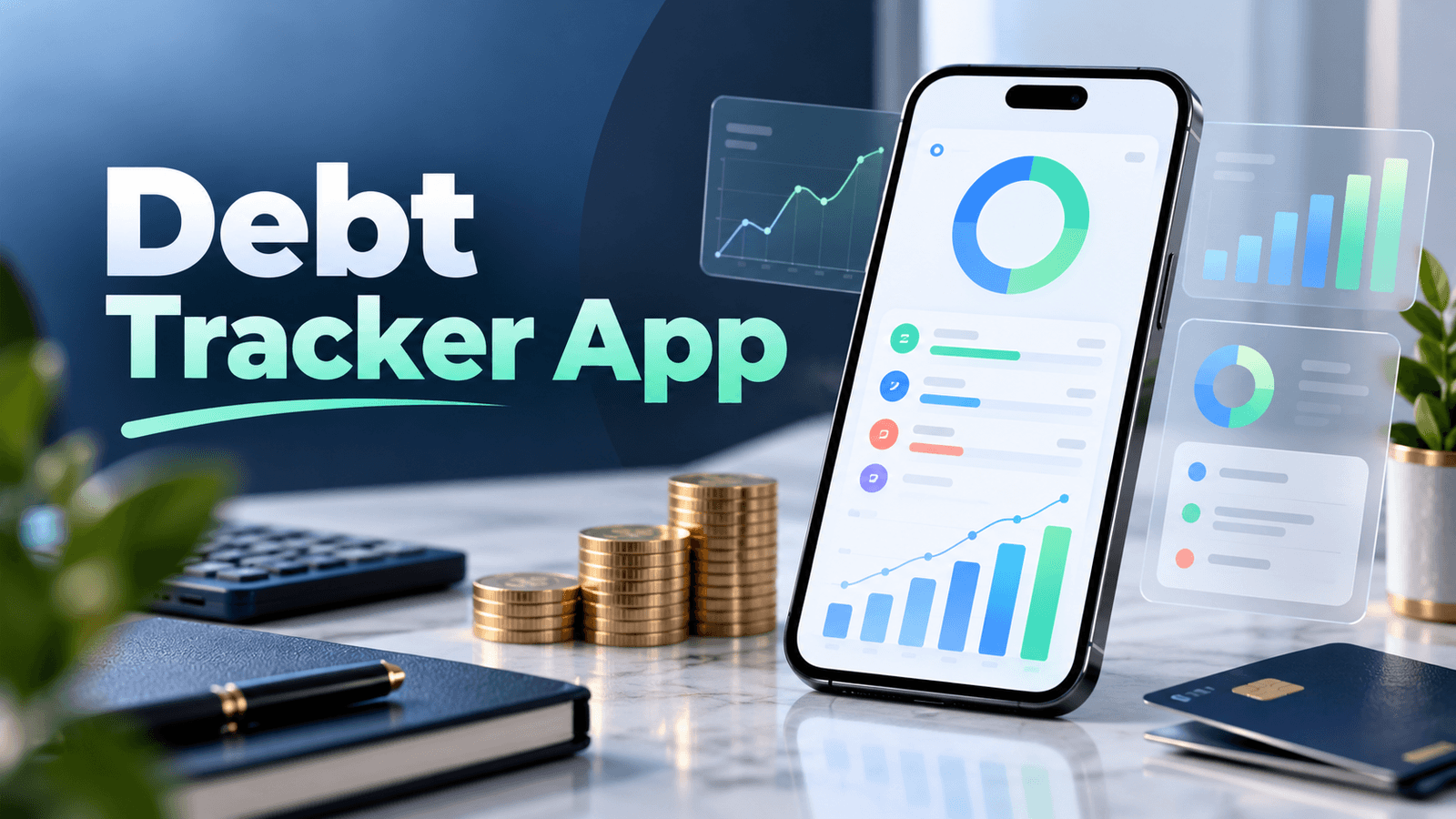
Discover how to build a debt tracker app with smart repayment plans, useful features, and a subscription model targeting $10K in monthly revenue.
A debt tracker app helps people organize loans, credit card balances, interest rates, and repayment schedules in one place. For entrepreneurs, building a simple app that combines debt monitoring, personalized payoff plans, and payment reminders could create a subscription business. The opportunity is not just tracking debt but helping users make better repayment decisions and stay consistent.
Why a Debt Tracker App Is a Business Opportunity
Managing multiple debts can become confusing when payment dates, interest rates, and balances differ. Spreadsheets require manual updates, while banking apps may not provide a complete repayment strategy across lenders. A dedicated app could solve this problem with one dashboard showing outstanding balances, upcoming payments and progress toward becoming debt-free.
However, free competitors already exist. A new product needs a specific advantage, such as simpler onboarding, privacy-first tracking, or personalized repayment guidance.
How a Debt Tracker App Would Work
Users enter their debts, including balances, interest rates, minimum payments, and due dates. The app calculates repayment schedules and displays a projected debt-free date.
The most useful features would include:
- Debt dashboard: Track multiple debts and monthly obligations.
- Debt payoff planner: Compare repayment strategies and projected interest costs.
- Smart reminders: Receive notifications before payments are due.
- Progress tracking: Visualize declining balances and completed payments.
- Scenario calculator: See how additional payments could change repayment timelines.
The Consumer Financial Protection Bureau explains two established repayment strategies: the debt snowball method, which prioritizes smaller balances, and the avalanche method, which prioritizes higher interest rates. A built-in debt snowball calculator could help users compare these approaches before choosing one.
Build a Simple MVP Before Adding AI
Start with manual debt entry, repayment calculations, payment reminders, and a basic dashboard. A small development team could build the initial product using React Native, Supabase, and a subscription billing provider. AI could eventually explain repayment scenarios in plain language, but accurate financial calculations should use deterministic formulas rather than relying on AI-generated numbers.
For broader budgeting functionality, explore how AI expense management approaches spending analysis.
How Could This App Generate $10K/Month?
A freemium debt management app could offer basic tracking at no cost, with paid features including advanced projections, household collaboration, and personalized reports.
Illustrative revenue scenarios:
- Scenario A: 1,000 subscribers × $10/month = $10,000 MRR.
- Scenario B: 500 subscribers × $20/month = $10,000 MRR.
These are revenue targets, not forecasts. Free alternatives and users' limited budgets may make paid conversion difficult. A stronger business model could involve optional partnerships with financial educators or credit counselors, subject to privacy requirements and applicable regulations.
Validate Demand Before Development
Interview 15 potential users, build a landing page, and demonstrate a clickable prototype. Offer a free repayment calculator to attract relevant visitors. Ask whether users would pay for automatic reminders, progress reports, or advanced planning. Existing products such as Undebt.it already offer free repayment planning, so differentiation matters more than adding numerous features.
Browse more app and SaaS business ideas to explore related financial software opportunities.
Should You Build This App?
A debt tracker is worth exploring if early users repeatedly engage with their repayment plans and demonstrate willingness to pay for specific improvements. Avoid building a generic tracker without a distinctive feature. Prioritize trustworthy calculations, data security and transparent pricing.
Want a Debt Tracking App Built for Your Business?
Interested in developing a repayment planner, financial dashboard, or subscription-based fintech tool? Visit Apps Hunt to explore your idea and submit a project inquiry.
Frequently asked questions
A debt tracker app helps users manage loans, credit cards, outstanding balances, interest rates, and repayment schedules through a centralized dashboard.
Users enter their debt details, including balances, interest rates, and monthly payments. The app calculates repayment progress and helps users organize upcoming payments.
Essential features include debt tracking, payment reminders, payoff calculators, financial dashboards, repayment schedules, and progress reports.
Yes, indirectly. A debt tracker can help users identify repayment strategies and plan additional payments. However, faster repayment depends on their financial circumstances and actual payments.
The snowball method prioritizes the smallest debt balance, while the avalanche method targets the highest interest rate first. The avalanche approach generally reduces interest costs more effectively when other factors are equal.
Development costs depend on features, platforms, security requirements, and integrations. A manual-entry MVP is generally less complex than an application requiring secure bank connections.
Potentially. For example, 1,000 paying subscribers at $10 monthly would generate $10,000 in gross monthly recurring revenue before expenses. Customer acquisition and retention determine whether this target is achievable.
Safety depends on the application's security practices. Users should look for encryption, transparent privacy policies, secure authentication, and responsible handling of financial information.
A freemium subscription model is one option. Basic debt tracking could remain free, while advanced repayment simulations, reports, and household planning features could require payment.
Identify a specific underserved audience, research existing products, interview potential customers, develop a simple MVP, test pricing, and acquire early users before expanding features.